

What does a boiler service include?
A proper boiler service follows the manufacturer's checklist, measures how the boiler is burning and leaves you a written record. Here is what that means for gas, oil and heat pumps, and how long it takes.
Why the checklist matters
Every boiler is built to a specification. The manufacturer’s installation and service manual says what should be checked each year, what the combustion readings should be, and which parts should be inspected or replaced. A proper service works through that list for your model.
What you want to avoid is the quick look and a sticker: the engineer opens the case, glances inside, signs the book and leaves. It looks like a service, but nothing has been measured and nothing recorded.
So the simplest answer to “what does a boiler service include?” is: whatever your boiler’s manufacturer says it should, done and written down.
How long does a boiler service take?
For most homes, about 45 minutes. That covers a gas combi in good condition or a well-kept oil boiler.
It can take longer when:
- the boiler has not been serviced for a few years and needs a heavier clean;
- it is an external oil boiler, where the casing and burner compartment need clearing out;
- the readings are off and the burner needs setting up;
- the engineer finds a fault that needs diagnosing before they can sign off.
If a service on a boiler that has been neglected takes far less than half an hour, it is worth asking what was done.
What a gas boiler service includes
A gas service must be carried out by a Gas Safe registered engineer. In Northern Ireland, as in the rest of the UK, anyone working on gas appliances for money must be on the Gas Safe Register.
A typical gas boiler service includes:
- Visual checks of the boiler, its casing, pipework and the flue route, including where the flue leaves the building.
- Operating checks: the engineer runs the boiler and checks it lights cleanly and heats both the radiators and hot water.
- Gas pressure and gas rate, so the boiler is getting the right amount of gas.
- Flue gas analysis with a calibrated electronic analyser, measuring carbon monoxide and carbon dioxide in the flue gases and comparing them to the manufacturer’s limits. This is the single most useful test in the service.
- Burner and heat exchanger inspection where the manual calls for it, with seals replaced if they are disturbed.
- Condensate trap: checked and cleaned on condensing boilers, as a blocked trap is a common cause of lockouts.
- Expansion vessel and system pressure, so the boiler is not losing pressure or over-pressurising.
- Safety devices: flame failure, pressure relief and other protections tested to make sure they work.
- Flue soundness and ventilation, so combustion products are leaving the house safely.
- A written record of what was checked and the readings taken.
If you have a carbon monoxide alarm, ask the engineer to look at it while they are there. If you do not have one, get one.
What an oil boiler service includes
Oil boilers need more hands-on work each year than gas boilers, because burning oil leaves soot and wears parts. An oil service should be carried out by an OFTEC registered technician.
A typical oil boiler service includes:
- Nozzle replacement. The nozzle sprays oil into the combustion chamber. It wears, and a worn nozzle causes poor combustion, smoke and lockouts.
- Fuel filter element replaced or cleaned.
- Combustion chamber and heat exchanger cleaned, removing soot that would otherwise waste oil.
- Electrodes checked and set, and the photocell cleaned so the boiler can see its own flame.
- Condensate trap checked on condensing oil boilers.
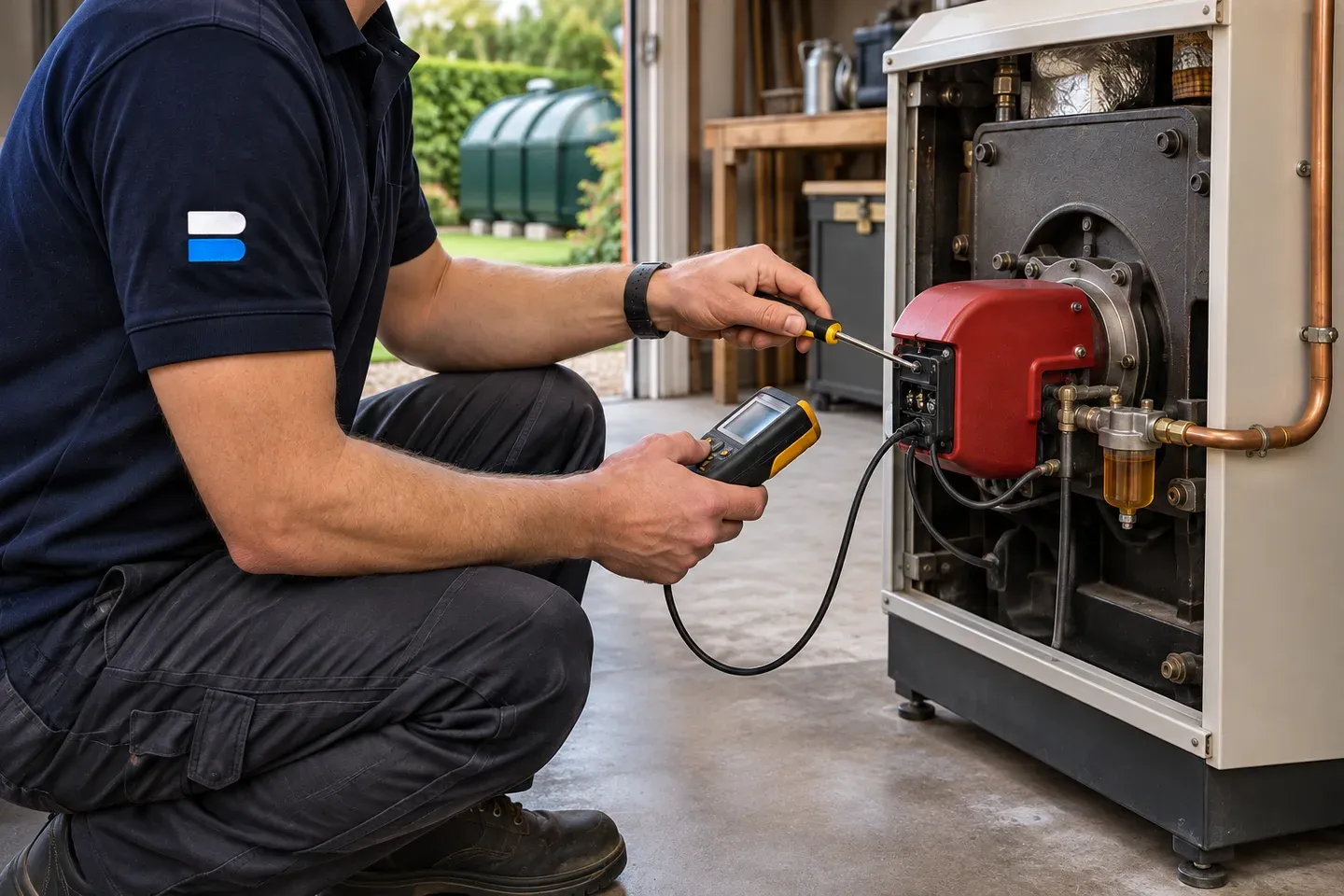
- Burner set up with a combustion analyser, recording CO2, smoke, flue temperature and efficiency.
- Flue, seals and controls checked.
- Oil tank, fuel line and fire valve: a visual check for leaks, damage and the condition of the tank base.
- OFTEC CD/11 service record completed and left with you. This is the standard form for oil appliance servicing and the record manufacturers and landlords expect.
What a heat pump service includes
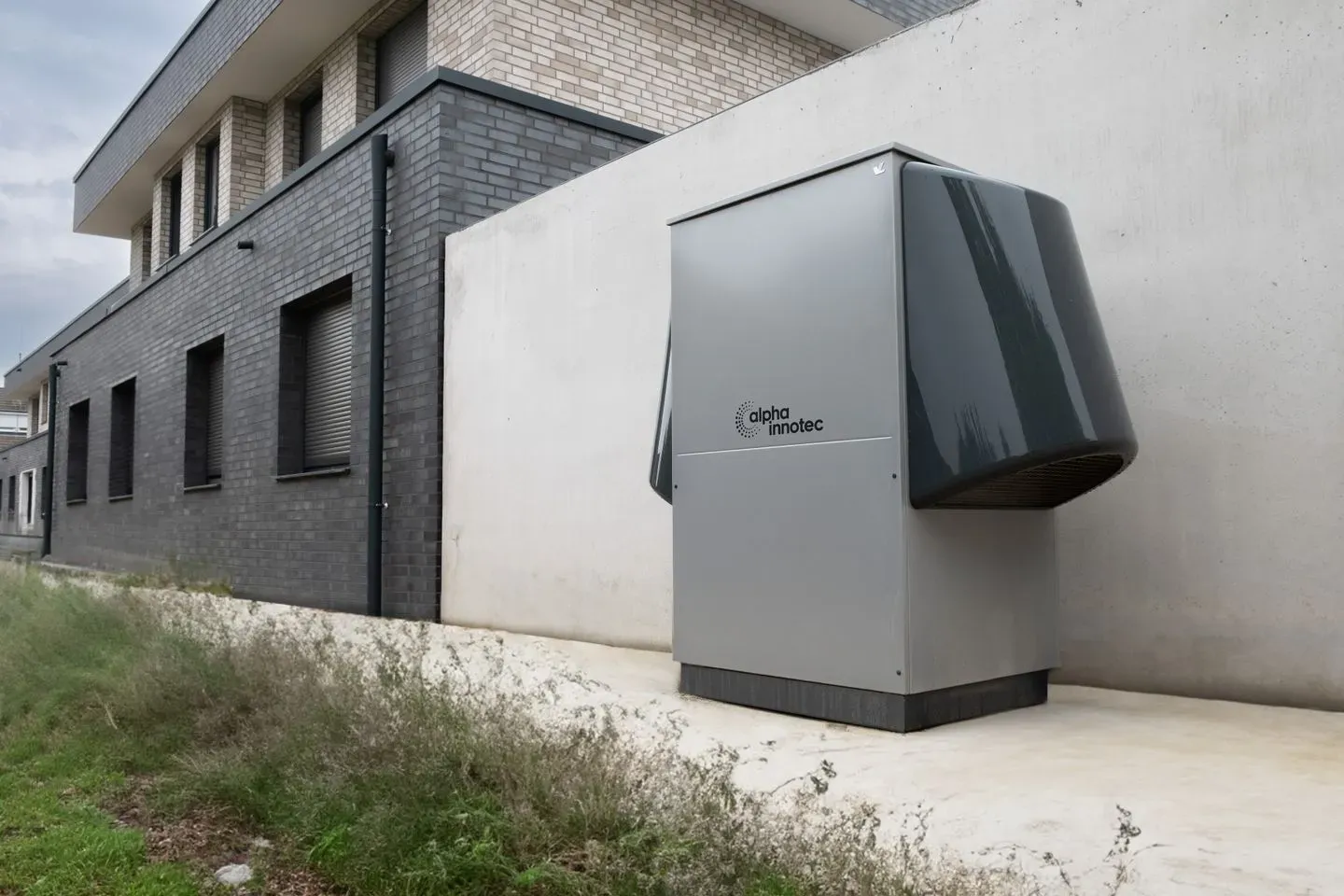
A heat pump has no burner, so its service looks different. For an air source heat pump, it typically covers:
- cleaning the outdoor unit’s coil and clearing leaves and debris around it;
- checking the fan, electrical connections and controls;
- checking system pressure, the water filter and the flow through the system;
- checking the refrigerant circuit for signs of leaks, without opening it unless there is a fault;
- checking the hot water cylinder, immersion and any legionella protection settings;
- reviewing performance and settings, which is where most homes gain or lose money.
See our heat pumps in Northern Ireland guide for more.
What you should get afterwards
At the end of the service you should get:
- a written or digital service record with the readings taken;
- for oil, a completed OFTEC CD/11;
- for landlords, a gas safety record (CP12) if that was booked, which is a separate check covering all gas appliances in the property;
- a plain explanation of anything found, and a price for any repair before any work is done.
Keep these records together. A manufacturer will ask for them if you ever claim on a guarantee.
What a service does not include
Being clear about limits saves arguments later. A standard service usually does not include:
- parts beyond the routine ones (an oil nozzle and filter are normally included; a new fan or pump is a repair);
- power flushing, radiator balancing or bleeding;
- work on electrics outside the boiler;
- replacing an expansion vessel, pump or diverter valve, which are repairs and would be quoted separately.
If something needs fixing, a good engineer tells you what it is, why it matters and what it will cost, and then you decide.
How often should it be done?
Once a year for gas, oil and heat pumps. Our guide on how often to service a boiler explains why, and when in the year is best.
Book a service
Gas service £79, oil service £89, heat pump service £129, all fixed and including VAT. Book online and see the next free slot, or email [email protected]. Gas Safe To confirm: gasSafe, OFTEC To confirm: oftec.
Before we call round.
The details that make booking a little clearer.
Still stuck? Call.
Talk through your boiler, your service or your plan.
[email protected][email protected]Send us a messageHow long does a boiler service take?
Do radiators get checked during a boiler service?
What is involved in servicing an oil boiler?
Do I need to be at home for a boiler service?
Is a boiler service a legal requirement?
A question for your next service?
Choose your service and a preferred arrival window. We confirm your exact slot by phone.