
Common problems with Firebird oil boilers
Firebird oil boilers are common in Northern Ireland, and most of the faults we see on them are the same ones any oil boiler gets. Here is what tends to go wrong, what you can check, and what needs an OFTEC engineer.
Before you start
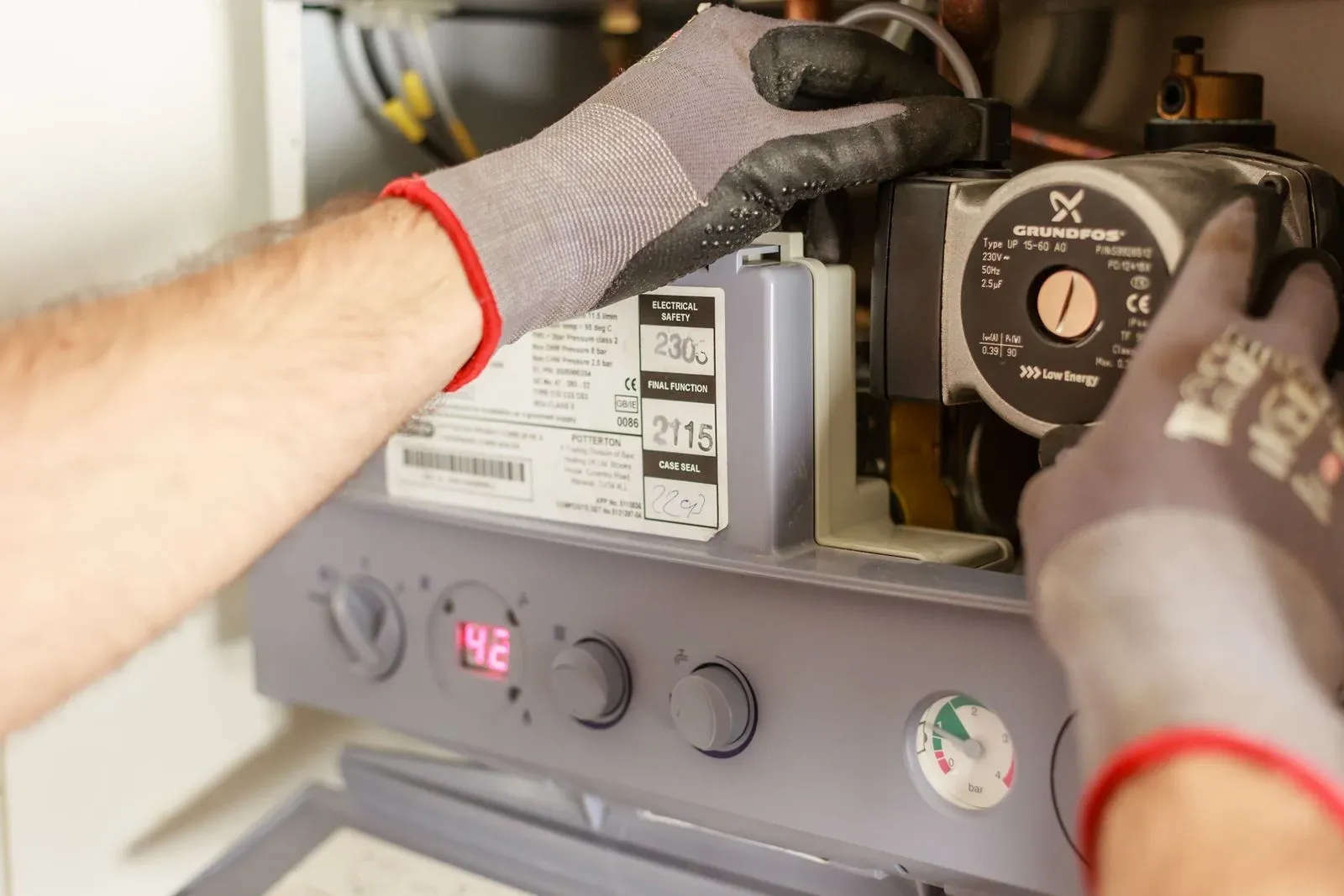
Firebird is an Irish manufacturer headquartered in County Cork, and its Enviromax and Envirogreen oil boilers are in many Northern Ireland homes, often as external or boiler house models. See our Firebird boiler page for the ranges and what a service involves.
This guide covers the faults we see most often. It does not list Firebird fault codes, because they differ between models and controls. Your boiler manual is the reference for any code your boiler shows.
What you can safely do
- Check the oil level and that the tank outlet valve is open.
- Check power, timer and thermostat.
- Press reset once, and once more after a few minutes if needed.
- Thaw a frozen condensate pipe at ground level with warm (not boiling) water.
When to stop
Turn the boiler off and call an engineer if you see smoke, smell oil or fumes indoors, hear a bang on ignition, or your carbon monoxide alarm sounds. Do not keep resetting.
Problem 1: the boiler locks out and will not fire
What you see: a red lockout light, no heat or hot water, and the burner tries to start then stops.
Common causes:
- Low or no oil, or sludge drawn from the bottom of a nearly empty tank.
- Air in the fuel line, often after running out of oil.
- Blocked fuel filter from sludge or water in the tank.
- Worn or blocked nozzle, the part that sprays the oil. If the boiler has missed a service, this is likely.
- Dirty photocell. The photocell watches for the flame. Soot on it means the boiler cannot see its own flame and shuts down.
- Electrode problems giving a weak spark.
What to do: work through the checks in our oil boiler not firing guide. If one reset does not hold, book an engineer. The fix is often a new nozzle, filter and a clean of the photocell, which is part of every service.
Problem 2: smoke, soot or an oil smell
What you see: black or grey smoke from the flue, soot staining around the terminal, or a smell of oil or fumes.
Common causes:
- the burner is not set up correctly, giving poor combustion;
- a worn nozzle;
- a sooted heat exchanger, restricting flue gases;
- a damaged seal or flue;
- a fuel leak at the burner or line.
What to do: turn the boiler off, ventilate, and book an engineer. Do not keep running a smoking boiler. Read oil boiler smoke or smell for the safety steps.
A puff of white vapour from a condensing boiler’s flue on a cold day is normal. It is water vapour and has no oily smell.
Problem 3: frozen or blocked condensate pipe
What you see: the boiler stops during a cold spell, sometimes with gurgling first. Common on external and boiler house models where the condensate pipe runs outside.
Common causes: the condensate pipe freezes, or debris builds up in the trap.
What to do: if you can reach the pipe safely at ground level, thaw it with warm water or a hot water bottle, then reset once. To stop it happening again, ask about insulating or rerouting the pipe at your next service. The trap is checked and cleaned on every service.
Problem 4: noisy firing or rumbling
What you see (and hear): a bang or “whump” as the burner lights, or a rumbling, pulsing sound once it is running.
Common causes: delayed ignition from worn electrodes or a poor spray pattern, unburnt oil in the chamber after several resets, or combustion that is badly set.
What to do: turn the boiler off and call an engineer, especially for a bang on ignition. See boiler noises.
Problem 5: water in the oil
What you see: repeated lockouts, especially in cold weather, and water or sludge visible in the filter bowl near the tank.
Common causes: condensation inside the tank over time, or rain getting in through a damaged lid or fitting.
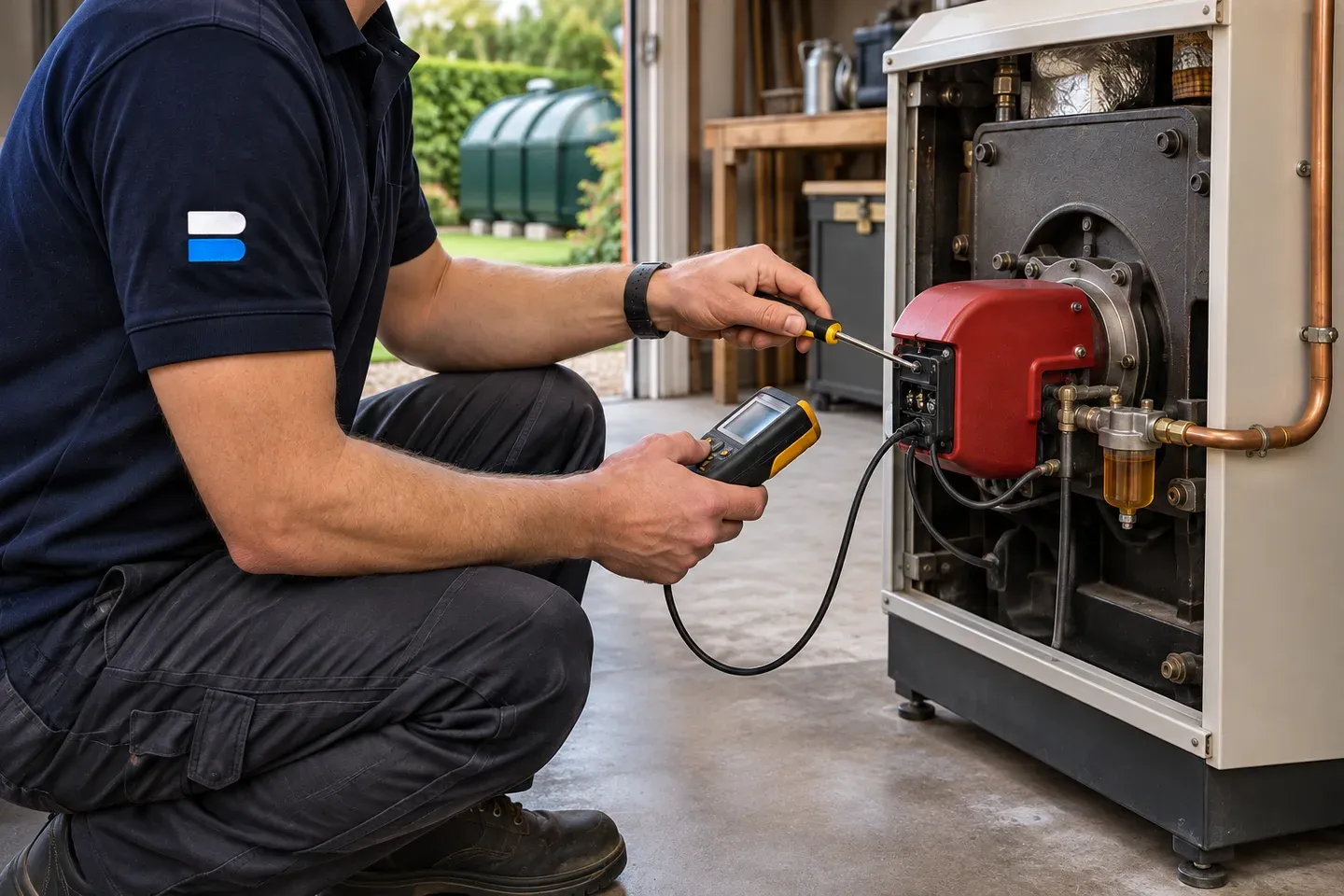
What to do: tell the engineer what you see in the filter bowl. Water in the tank can be removed, and a tank in poor condition is worth assessing before it leaks. We check the tank, fuel line and fire valve visually on every oil service.
Problem 6: losing pressure (sealed systems)
Many Firebird boilers are on sealed heating systems with a pressure gauge. If yours keeps dropping, the cause is in the heating system rather than the burner: a leak, a weeping relief valve or an expansion vessel that has lost its charge. See boiler pressure low.
How to avoid most of these
- Service every year, ideally in late summer or early autumn. Most of the problems above are prevented or caught on a service.
- Keep the tank above a quarter full in winter, so sludge from the bottom is not drawn into the line.
- Insulate external pipework and condensate runs before the first frost.
- Keep your CD/11 records, which matter for your guarantee. Check your guarantee terms.
Book a Firebird service or repair
Oil service £89, fixed, including VAT and the CD/11 record. Repair visit £85 for the first hour, then a fixed quote before any further work. Book online or email [email protected]. OFTEC To confirm: oftec.
Before we call round.
The details that make booking a little clearer.
Still stuck? Call.
Talk through your boiler, your service or your plan.
[email protected][email protected]Send us a messageWhat are the common problems with Firebird oil boilers?
How do I reset my Firebird boiler?
Why does my external Firebird boiler stop in cold weather?
Are Firebird boilers reliable?
A question for your next service?
Choose your service and a preferred arrival window. We confirm your exact slot by phone.