
Oil boiler smoke or smell: what it means and what to do
Smoke from the flue or a smell of oil or fumes is your boiler telling you something is wrong. Some causes are minor, some are not. Here is how to tell, and what to do right now.
Do this first
If you have smoke or fumes inside the house, or your carbon monoxide alarm is sounding:
- Turn the boiler off at its switch or fused spur.
- Open doors and windows to ventilate.
- Get everyone, including pets, out into fresh air.
- If anyone has symptoms such as headache, dizziness, nausea, breathlessness or drowsiness, get medical help straight away and tell them you suspect carbon monoxide.
- Do not use the boiler again until an engineer has checked it.
Do not reset the boiler to “see if it clears”. Smoke or fumes mean combustion or the flue is not right, and running it again can make things worse.
If you smell gas rather than oil, call the NI Gas Emergency Service on 0800 002 001.
What you can safely do
- Turn the boiler off and keep it off.
- Ventilate the room.
- Look, from a safe distance, at the flue terminal outside for soot staining or anything blocking it, such as a bird’s nest or leaves. Do not climb to reach it.
- Check around the boiler and the oil tank for visible oil, and note where any smell is strongest.
- If oil is leaking, turn off the valve at the tank outlet if you can do it safely.
Everything beyond that, including opening the boiler, adjusting the burner or clearing the flue, is a job for an OFTEC registered technician.
Black smoke from the flue
Black or grey smoke from an oil boiler’s flue means oil is not burning completely. Common causes:
- Worn or partly blocked nozzle. The spray pattern breaks down and oil burns poorly. Nozzles are replaced on every service; an overdue service is the most common cause we see.
- Air setting wrong. Too little air for the amount of oil gives smoky, sooty combustion.
- Sooted heat exchanger or baffles. Soot restricts the flue gases, which makes combustion worse, which makes more soot.
- Partly blocked flue or terminal. Nests, debris or a damaged flue restrict the exit.
- Water or contamination in the oil.
A small puff of white vapour from a condensing boiler’s flue on a cold day is normal: it is water vapour, not smoke. It disappears quickly and has no oily smell.
Oil smell in the house
A brief smell when the boiler starts
A faint whiff for a few seconds at start-up can happen, especially on older boilers. If it is getting stronger or lasting longer, have it checked.
A persistent oil smell
Possible causes:
- A leak on the fuel line or at the burner. Look for drips or damp patches under the boiler or along the fuel line.
- A seal or gasket failing on the burner or boiler door, letting fumes out into the room.
- A flue problem, letting combustion products back into the room or boiler house.
- Oil spilled during a delivery or from the tank, with the smell coming in from outside.
An oil smell indoors needs an engineer. If it comes with smoke, fumes, headaches or a carbon monoxide alarm, follow the steps at the top of this page first.
A fumes or “burning” smell
A smell of fumes rather than raw oil can point to combustion products escaping: a damaged flue, failed door seal or blocked heat exchanger. Treat this seriously. Turn the boiler off, ventilate and book an engineer.
Leaking oil tank
A leaking tank is an environmental problem as well as a heating one. Heating oil that reaches a drain, stream or the ground can cause serious pollution, and clean-up costs can be high.
- Turn off the outlet valve at the tank if you can do so safely.
- Use absorbent material (cat litter, sand, old towels) to soak up and contain oil. Keep it away from drains.
- Do not hose oil away.
- Contact your home insurer, as many policies cover oil loss and clean-up.
- If oil has entered a drain or watercourse, report it to the NIEA water pollution hotline on 0800 80 70 60.
We give the tank, fuel line and fire valve a visual check on every oil service. If yours is showing its age, we will tell you before it becomes a leak.
Why servicing prevents most of this
Almost every cause of smoke and smell is either found or prevented on an annual oil service:
- a new nozzle and filter every year;
- the combustion chamber and heat exchanger cleaned of soot;
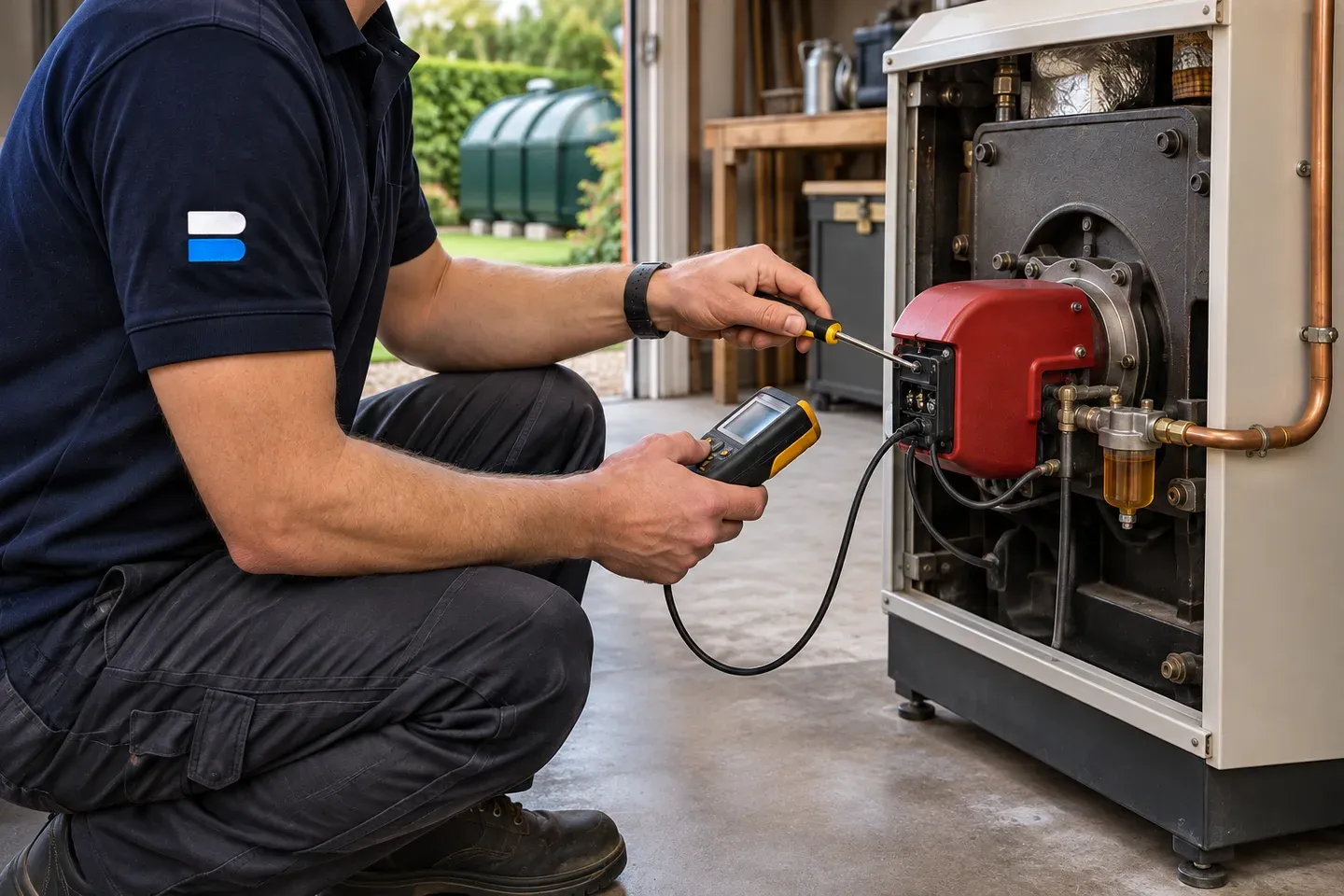
- the burner set up with a combustion analyser, checking smoke, CO2 and flue temperature against the manufacturer’s figures;
- seals, flue and fuel line checked;
- an OFTEC CD/11 record of the readings.
See what a boiler service includes for the full list.
Carbon monoxide: one more reminder
Oil boilers are sometimes thought of as safer than gas when it comes to carbon monoxide. They are not immune. Fit an audible carbon monoxide alarm near the boiler and in bedrooms, test it regularly, and replace it when it reaches the end of its life.
Get it checked
If your boiler is smoking or smells, book a repair visit: £85 for the first hour, then a fixed quote before any further work. If it is due a service, book the oil service at £89. Book online or email [email protected]. OFTEC To confirm: oftec.
Before we call round.
The details that make booking a little clearer.
Still stuck? Call.
Talk through your boiler, your service or your plan.
[email protected][email protected]Send us a messageWhy is my oil boiler smoking?
Is it normal to smell oil near an oil boiler?
Can an oil boiler give off carbon monoxide?
What should I do if my heating oil tank is leaking?
A question for your next service?
Choose your service and a preferred arrival window. We confirm your exact slot by phone.